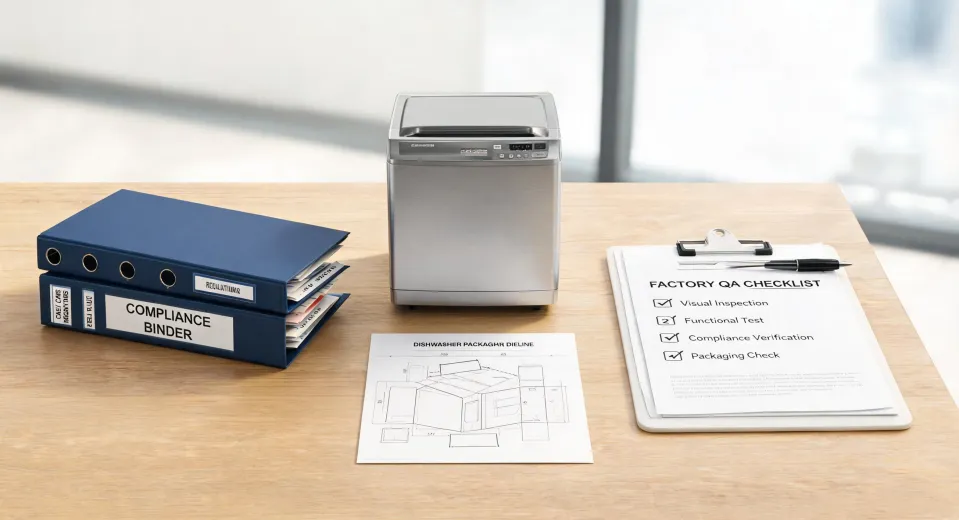
Last year, I almost approved a $4,200 invoice that would have saved us $400. It seemed like a win. It wasn't. Once I ran the total cost through our spreadsheet, that quote had a $750 installation fee, $180 in shipping, and a warranty that started before installation. The more expensive quote was actually cheaper.
I'm a procurement manager at a 40-person hospitality company. I've managed our supplies and equipment budget ($180,000 at its peak) for six years, negotiated with more than 30 vendors, and built a cost tracking system that flags anomalies. This article is about the one comparison that matters: sticker price vs total cost of ownership.
I'll use a Miele front control dishwasher as the anchor example, then run a few less obvious purchases through the same lens: Miele Olympus 300 vacuum bags, changing a garage door seal, the Ulike IPL hair removal device price, and even the question "why does my electric toothbrush smell". Yes, all of those have procurement lessons.
Here's the framework I use. It might sound kinda obvious, but you'd be surprised how many invoices get approved without it.
The Comparison Framework: Sticker Price vs Total Cost
When I evaluate any purchase, I compare three dimensions:
- Upfront cost — the invoice total plus delivery, installation, and setup fees.
- Consumables and running costs — filters, bags, heads, energy, and cleaning supplies.
- Lifespan and service reliability — how often it breaks, how fast support responds, and how long it lasts.
The mistake I see most often — from other buyers and from my past self — is stopping at dimension one.
Dimension 1: Upfront Cost — The Number That Lies
A Miele front control dishwasher is a good place to start. It's not the cheapest commercial dishwasher on the market, and it would be silly to pretend otherwise. But when I compared it against a mainstream brand in 2023, the Miele quote came in about 18% higher on the base price. Then I added the items the other quote didn't mention: installation, door panel integration, and a custom rack. The gap dropped to 4%.
I went back and forth between the Miele front control dishwasher and a mainstream model for two weeks. The mainstream one had the lower number on the invoice. The Miele had a better installation package and a service rep who actually answered the phone. I chose Miele because the total install cost was nearly identical — and because a dishwasher failure in a 14-room hotel is not an inconvenience. It's a revenue problem.
Most buyers focus on per-unit pricing and completely miss setup fees, revision costs, and shipping that can add 30-50% to the total. The invoice price is a starting point, not a final number.
Before I get too deep into the dishwasher, one quick note on shipping. Small parts are easy to price via USPS — as of January 2025, a First-Class Mail letter is $0.73 at usps.com, and a large envelope is $1.50. But for a 300-pound dishwasher, freight is where the real upsell hides. Always ask for a delivered-and-installed quote.
The same logic showed up in a completely different purchase. Earlier this year, an employee asked if we could buy a Ulike IPL hair removal device for the staff wellness room. The Ulike IPL hair removal device price seemed high for a single-function tool. Then I compared it to clinical sessions: about $80 per session, with 8 sessions recommended. The device paid for itself after roughly 8 uses. Per FTC guidelines (ftc.gov), any claim like "permanent reduction" has to be truthful, not misleading, and backed by evidence, so I asked for the documentation before approving. The vendor provided it. We bought the device.
What I didn't plan for was utilization. A $300+ device sitting on a shelf is the most expensive thing we bought that quarter. The price wasn't the issue. Use was. That's a cost dimension I now add to every business case.
And then there's the garage door seal. In a commercial building, a broken seal is not just a draft. It raises HVAC load, invites pests, and makes the loading bay look bad. When it was time to change garage door seal, one vendor quoted a $25 PVC seal. Another quoted an EPDM rubber seal at $60. Labor was roughly the same: $120. The $25 seal would need replacing in about 18 months. The $60 seal had a 5-year track record in the same climate. The price difference was gone after the first winter.
Dimension 2: Consumables — Where Cheap Gets Expensive
This is the dimension that flips most of my purchasing decisions.
Take Miele Olympus 300 vacuum bags. If you run a Miele canister vacuum, you know these bags are not the cheapest option at the supply store. I've seen generic bags priced at less than half. But when I tracked consumables for our housekeeping team over 12 months, the generic bags cost more. We used almost twice as many because they lost suction early. We also needed an extra filter change. The branded Miele Olympus 300 vacuum bags were about 40% more expensive per bag, but they reduced our cost per month by roughly 9%.
Ask any procurement person: the question everyone asks is "what's the price per bag?" The question they should ask is "how many bags will I use per month?" Same logic as printer cartridges. The printer is cheap; the ink is where they get you.
And then there's the why does my electric toothbrush smell issue. I know, it sounds like a joke. But a bathroom drawer in one of our guest rooms smelled bad enough that housekeeping flagged it. The cause wasn't the toothbrush motor. It was water and toothpaste residue sitting around the brush head and in the rubber base.
People think the toothbrush is broken and needs replacing. Actually, the brush head is a consumable, and so is the cleaning routine. Soak the head in vinegar, dry the base, then put a new head on a schedule. If the smell comes back quickly, that's when you replace the unit.
Dimension 3: Lifespan and Service Reliability — The Slow Leak
Here's a causation issue I've seen for years. People think expensive vendors deliver better quality because they charge more. Actually, vendors who deliver quality can charge more. The causation runs the other way. The price isn't the cause of quality; it's a result of it.
Our Miele front control dishwasher in the main kitchen has run daily since 2021. We've replaced one door gasket. Meanwhile, a cheaper "commercial" dishwasher in the break room has had two service calls in 14 months, each around $220. That's $440 in repairs on a machine we bought to save $600. It's not even a question of which one is better anymore. It's a question of which one costs less per successful cycle.
The same thing applies to the garage door. Cheap garage door seals are often made from PVC that gets brittle in UV light. An EPDM seal handles temperature swings better and stays flexible. If you change garage door seal on a schedule, you're doing maintenance. If you wait until you see daylight under the door, you've already paid for the energy loss.
For the Ulike IPL hair removal device price, the lifespan of the device itself was never the concern. It's the lifespan of the user's interest. If you're buying it for your own home, fine. If you're buying it for a staff room, plan for it to be used. Otherwise, the most expensive option is the one that stays in the box.
So Which One Should You Choose?
I'm not going to say "buy premium every time." That's lazy advice. But I will say this: the best buying decision depends on how long the item has to live.
- Short-term or trial: Buy the sticker-price option. Keep the entry cost low, and put the replacement cost in next year's budget.
- Daily workhorse: Buy the total-cost option. That's why our main kitchen runs a Miele, our housekeeping uses branded Miele Olympus 300 vacuum bags, and our garage door seal is EPDM rather than PVC.
- Optional or wellness item: Ask "will it be used?" before asking "what's the Ulike IPL hair removal device price?" A great price on an unused device is still a loss.
- Maintenance complaint: Try the cheap fix first. For an electric toothbrush smell, that's a clean head and a dry base. But if it's a commercial room item, schedule a replacement head. Your guests shouldn't have to deal with somebody else's biofilm.
Bottom line: The price tag tells you what something costs to buy. It doesn't tell you what it costs to own. Whether I'm approving a Miele front control dishwasher or a garage door seal, I run the same three-dimension comparison. Since 2022, it has saved us about $8,400 per year — roughly 17% of our parts budget. It also annoys me every time I see a quote that looks too cheap to be true, because I know I'll end up doing the math.
Caveat: This was written in early 2025. Prices and product lines change quickly. The Miele front control dishwasher model I compared may not be current, and the Ulike IPL hair removal device price definitely shifts with promotions. Verify the current numbers before you make a budget decision.