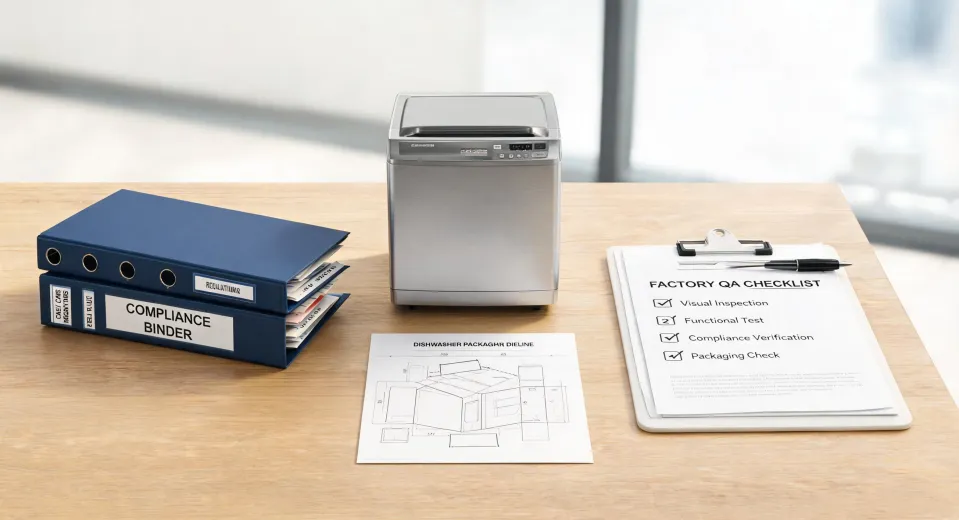
It was 4:45 on a Tuesday when the office kitchen backed up. Actually, the dishwasher backed up—a Miele built-in unit that had handled five or six loads a day since we moved into this building in 2021. Water pooled at the bottom. The cleaning crew put an “Out of Order” note on it. By Wednesday morning, someone had printed a search phrase and stuck it to my desk: miele dishwasher repair service near me.
I'm the administrative buyer for a 350-person company. I manage about $350,000 in annual purchasing for facilities, office supplies, and equipment. I've been in this role since 2020, and I have a decent sense of what can go wrong with vendors. I do not have a decent sense of what goes wrong inside a dishwasher. That gap is exactly why I need repair partners who know their own boundaries.
The search for a Miele dishwasher repair service near me
Searching that phrase gave me three options within 25 miles:
- A general appliance repair company with strong reviews.
- A freelance handyman who said, “I can fix that—it's just a dishwasher.”
- An authorized Miele service provider, located about 25 minutes away.
Quotes ranged from $120 for the handyman to $185 for the general company, with the authorized provider at a $189 diagnostic fee plus parts. I'll be honest: the $120 number caught my eye. It's tempting to think any appliance person can handle a premium dishwasher with the same parts and skills as a standard one. But that's an oversimplified view. Miele units have integrated water systems, specific diagnostic software, and clearances that aren't obvious if you're used to older designs.
The handyman said my concerns didn't matter. The general company said they'd “look at it and figure it out.” The authorized provider asked what error code was showing, which spare part I already had, and whether the warranty transfer had been done after the lease. That last question sold me.
Miele's official service guidance also recommends using authorized providers for repair so you don't compromise warranty coverage or genuine parts (miele.com, accessed February 2025). I'm not 100% sure every out-of-warranty repair needs a manufacturer-trained tech, but for a machine that runs six cycles a day, I didn't want to gamble on a handyman's guess.
Making the call under time pressure
Normally I'd get three written quotes and check references. But the office kitchen was closed, and the paper-cup pile in the break room was becoming a fire hazard. I had about 24 hours to approve a repair. I chose the authorized provider and approved the $189 diagnostic fee.
In hindsight, I should have asked a few more questions about parts availability. But with 350 people waiting for coffee and lunch cleanup, I made the best decision I could with the information I had. That's a normal thing in purchasing. It doesn't feel great, but it's real.
After I hit “approve,” I kept second-guessing. What if the authorized provider was just a brand-name upcharge? The two days before the technician arrived were stressful. I didn't relax until he sent a photo of the damaged drain valve and said he had seen the same failure on other Miele dishwashers in commercial kitchens.
What the specialist found
The technician spent about an hour on the machine. He replaced a blocked circulation-pump drain valve and cleaned out residue that had built up over time. The total bill was about $412, including the diagnostic fee, parts, and labor. Not cheap. But it fixed the problem without replacing the whole unit.
He also asked what cleaning product we used. The previous weekend cleaning vendor had switched to a cheap detergent pod. The residue from those pods had confused the drain sensor. He gave me the brand spec for our water hardness and said, “If you use the right tablet, you'll save more money than any repair discount.”
That conversation changed how I think about “all-in-one” maintenance. A good specialist doesn't just swap parts; they tell you what to stop doing.
A side lesson: vacuum cleaners and other random purchases
While he was there, the technician looked at our cleaning equipment. Our facilities team uses a Miele Complete C3 Marin canister vacuum cleaner for carpeted conference areas and open offices. It's been dependable for three years. He said the C3 Marin is a good fit for mixed carpet and hard floor, but he noticed the filter bag had been changed less often than recommended (note to self: check the filter schedule before our next facilities order).
I asked whether we should also buy a smart vacuum cleaner to run during the night. He said a smart vacuum cleaner is useful for open walkways and break rooms, but it won't replace a canister unit for proper deep cleaning. That kind of boundary is exactly what I want from a supplier. He wasn't trying to upsell me on something I didn't need; he was telling me what each tool is for.
The same week, HR asked me to order a small ceiling fan no light for a stuffy phone room. I didn't pretend to know airflow specs. I checked stock, asked an electrician to confirm the mounting and power source, and processed the purchase order. Similarly, a Slack message asked how much is a hair straightener, because we needed one for the employee wellness room. I had no idea. I checked listings at two major retailers, found professional models around $50–$120 (as of February 2025; verify current prices), and ordered a mid-range model.
These purchases sound unrelated. But they all follow the same rule: don't confuse being a generalist with being a specialist. My job is to be a specialist in procurement—contracts, compliance, vendor onboarding, and invoice accuracy. I am not the expert on dishwashers, vacuums, ceiling fans, or hair straighteners. My job is to find the right expert and verify that they know their limits.
What I'd tell another buyer
I'd rather work with a specialist who knows their limits than a generalist who overpromises. The repair tech who said “a smart vacuum cleaner won't solve your deep-carpet problem” earned our future maintenance budget. The handyman who said “it's just a dishwasher” lost it.
If you're managing office purchasing, don't let the pressure of an urgent repair push you into a cheap, generic quote. Search for the brand-specific service, ask what the specialist knows, and accept that some decisions are made in 24 hours with incomplete information. That's not a failure; it's the difference between being a buyer and being a repair technician.
Prices above are from personal invoices and market listings as of February 2025. Service rates vary by market and machine condition; verify current quotes before authorizing any repair.