If you're a commercial operator—hotel, restaurant, laundromat, or facility manager—you've probably got a running list of equipment questions. This isn't a full Miele catalog review. It's a set of direct answers to the questions I get asked most often, plus one thing most buyers don't think about until it's too late.
Are Miele vacuum cleaners ever actually on sale?
Yes, but you have to understand how Miele pricing works. Miele is a controlled-price brand in the U.S. Authorized dealers can't just slash prices whenever they want. The "sales" you see on Miele vacuums are almost always one of two things:
- Discontinued models being cleared out to make room for the next generation
- Bundle promotions where the base unit is full price but you get accessories included
In Q2 2024, I reviewed our procurement records and saw a pattern: the best Miele vacuum deals appeared in late spring and early fall, when dealers were clearing prior-year models. On one order of twelve C3 units for a hotel project, the discount was about 18% off MSRP—not huge, but real. (Should mention: that was for a single bulk purchase, not a retail one-off, so the pricing structure is different. If you're a small business buying one unit, you'll typically get a better deal on a bundle than on a straight price cut.)
For commercial buyers, the more important thing is the dealer. Buying from a non-authorized seller to save $40 can cost you the warranty and the service relationship. That's the part that doesn't show up in the price comparison.
What should I know about Miele dryer repair in Seattle?
Honestly, I'm not sure why Seattle specifically has such a shortage of trained Miele dryer technicians, but it comes up every few months with our clients. The conventional wisdom is "just call any appliance repair shop," but that's exactly what leads to expensive mistakes.
Miele dryers are not like American-style dryers. They use a different lint filtration system, and some models are ventless heat pump units. A technician who mostly works on Whirlpool or GE units may not understand the diagnostic codes, let alone the proper disassembly process. Everything I'd read about the importance of factory-trained technicians sounded like marketing—until I saw the aftermath of an untrained repair attempt. One of our properties had a Miele dryer with a heating issue. The first repair tech misdiagnosed the control board, replaced the wrong part, and billed $380. We brought in a Miele-certified technician, and the actual problem—a clogged lint sensor line—cost $140 to fix. The first repair bill was sent back to the property owner, who had to fight to get a refund.
When I compared the two invoices side by side, I finally understood why Miele pushes authorized service so hard. It's not about locking you into a network. It's about someone who actually knows the product. If you're in the Seattle area, your options for Miele dryer repair include Miele's own service group and a handful of independent shops that carry Miele factory certification. Ask a shop directly: "How many Miele dryers have you serviced in the last six months?" If the answer is vague, that's your answer.
One more thing: before you call anyone, check the obvious. Miele dryers have a filter that needs cleaning regularly, and a full filter is the #1 cause of poor drying performance. It sounds too simple to be the issue, but it's true. I've never fully understood why that filter clogs so quietly, but it does. Best guess: Seattle's humidity means less static electricity, so lint doesn't stick visibly to the filter mesh—it just builds up until airflow drops.
What's the best smart plug for Home Assistant?
For commercial facilities using Home Assistant, the best smart plug is the one that doesn't drop offline. That's it. Everything else is secondary.
I've tested a lot of smart plugs across hotel floors, break rooms, and even a small laundry facility. When I compared Z-Wave plugs against Wi-Fi plugs over a three-month period, the Wi-Fi ones were way more convenient to set up but noticeably less reliable on crowded networks. The Z-Wave plugs needed a hub, which is extra infrastructure, but they just worked. If you already have a Z-Wave stick for Home Assistant, that's my pick. If you don't, the Sonoff units flashed with Tasmota run circles around most consumer options for the price, but they require a little technical patience.
Why does this matter? Because the best smart plug in a lab is irrelevant if it drops off the Zigbee mesh every Tuesday afternoon when the microwave turns on. For commercial use, reliability beats features every time. Also, make sure the plug has a physical button—when the network is down, you still need to turn things off without opening an app.
The question isn't "which smart plug has the most energy monitoring features." It's "which one will still be working next year." Buy one spare unit. That's the quiet piece of advice that saves you a late-night drive to the facility.
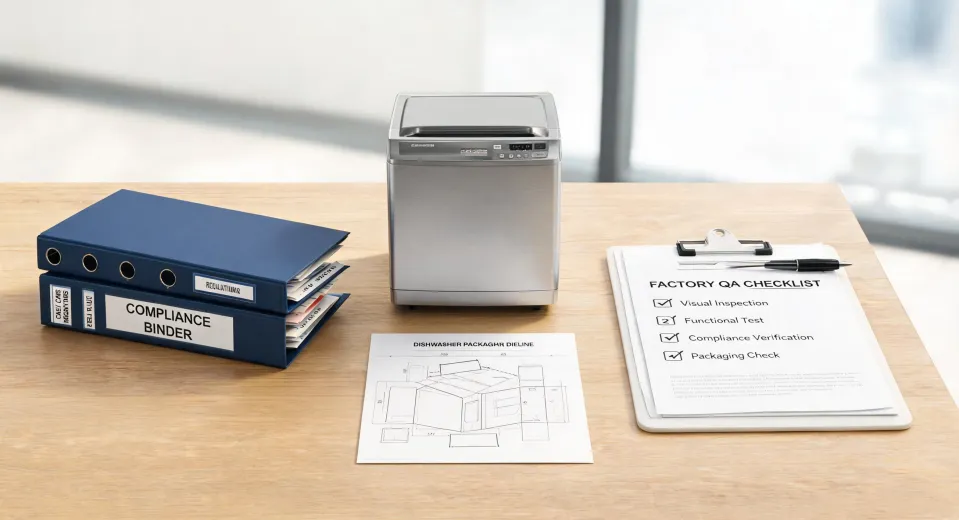
Can you connect a portable dishwasher to the kitchen sink?
Yes, you can. But there's a caveat that most buyers only discover after they've already unpacked the unit.
Portable dishwashers come with a quick-connect adapter that mounts on the kitchen faucet. The adapter splits the water flow so the dishwasher can draw water and drain back into the sink. The catch: it only works with standard screw-thread aerators. If your faucet has a pull-down spray head or a non-standard thread, the included adapter won't fit. You can buy universal adapters, but they're not as universal as the name suggests. I've seen a $400 portable dishwasher sit in a break room for two weeks because we were waiting on a $12 adapter. That's a planning problem, not a product problem.
The other limitation is drain hose placement. The hose hooks over the edge of the sink, which means you can't use the sink while the dishwasher is running. For a home kitchen, that's fine. For a commercial break room or small office pantry, it can be a real constraint. The dishwasher runs anywhere from 90 minutes to 2.5 hours depending on the cycle. That's a long time without sink access.
So yes, connecting a portable dishwasher to a kitchen sink is straightforward. Just verify your faucet thread type before you order, and think through the sink access issue ahead of time. When I see facilities make this work well, it's because they've dedicated the dishwasher to a specific sink and planned around its cycle time.
How much propane does a gas stove use?
I'll be straight with you: this one depends heavily on BTU ratings, actual usage patterns, and how often somebody cranks the burner to high and walks away. But I can give you a working number.
A typical commercial gas cooktop burner runs about 15,000 to 20,000 BTUs per hour on high. Residential burners are usually 9,000 to 12,000. One gallon of propane contains roughly 91,500 BTUs. So a single commercial burner on high burns about 0.16 to 0.22 gallons per hour. If you have six burners running on high for one hour, that's about one gallon to 1.3 gallons. In practice, nobody runs all burners on high for an hour straight. Real usage is maybe 15–30% of that, depending on the menu.
Let me put it differently. An average commercial gas range used for a busy dinner service might consume 1.5 to 2 gallons of propane per day, assuming about four hours of active cooking with multiple burners cycling. A heavy-use operation—think a diner cooking breakfast through lunch—might go through 4 to 5 gallons per day. That's based on our clients' propane delivery records, not a spec sheet.
Before you buy, check the stove's BTU rating on the manufacturer spec sheet and run the math yourself. The range of variation between stove models is huge. A high-output commercial wok burner can pull twice the propane of a standard burner at maximum flame. And if you're comparing gas to induction, remember that gas also vents heat and moisture into your kitchen, which raises your HVAC load. That's a hidden cost that doesn't show up on the propane invoice.
Also, one thing I always tell our commercial clients: get the actual BTU numbers from the spec sheet, not the appliance's "total BTU" marketing figure. Total BTU is the sum of all burners at absolute maximum—a number you will never actually hit in real cooking. The useful number is the BTU rating of the burner you'll use most, multiplied by realistic duty cycles.
If you're setting up a new kitchen, plan for at least two weeks of propane supply on hand if you're on tank delivery, more if you're in a remote area. The cost of a second propane tank is cheaper than the cost of a missed service day.
One thing most buyers overlook
The question I don't get asked enough is about installation and utility requirements. Whether you're buying a Miele dryer, a portable dishwasher, or a gas stove, the equipment is only as good as its installation. Miele appliances, especially the laundry and kitchen lines, often have specific clearance, venting, and electrical requirements that differ from standard U.S. appliances.
I oversaw a kitchen upgrade in 2023 where we swapped a standard dishwasher for a Miele model. The machine itself was beautiful. The problem was the delivery team didn't account for the difference in electrical requirements, and we had to pay an electrician $450 for a same-day visit to wire the new plug. It wasn't Miele's fault—it was a spec mismatch that we should have caught during planning.
The vendors who say "this isn't our strength—here's who does it better" are the ones I keep working with. That is, when a dealer told us "we're not the right fit for your laundry room layout; here's a plumbing contractor we trust," they earned our business for everything else.
Before you finalize any appliance purchase, ask these three questions:
- What are the exact utility requirements for this model?
- Who will deliver and install it, and are they certified for this brand?
- What does the warranty cover if installation is done by a third party?
Prices and service availability vary by region and time. Verify current details with your local authorized dealer and service partner.