-
Questions
-
Is the Miele 5266 dishwasher worth it for a commercial kitchen?
-
What does 'counter depth' mean on a Miele counter depth refrigerator?
-
How many watts does a mini fridge use per day?
-
Do I need a Scandinavian electric kettle in a hotel breakfast nook?
-
What about a global industrial electric auto floor scrubber?
-
Why would a specialist tell me not to buy Miele?
-
What's the biggest hidden cost in appliance procurement?
I coordinate appliance orders for hotels, restaurants, and small laundries. That's been my job for nine years. In that time, I've personally made six significant mistakes, totaling roughly $28,000 in wasted budget—enough to fill an expensive spreadsheet. Now I maintain our team's checklist to keep others from repeating them. This FAQ is the one I wish someone had handed me before my first big commercial order. It covers the Miele 5266 dishwasher, Miele counter depth refrigerators, and a few questions that sound off-topic but come up anyway.
Questions
- Is the Miele 5266 dishwasher worth it for a commercial kitchen?
- What does 'counter depth' mean on a Miele counter depth refrigerator?
- How many watts does a mini fridge use per day?
- Do I need a Scandinavian electric kettle in a hotel breakfast nook?
- What about a global industrial electric auto floor scrubber?
- Why would a specialist tell me not to buy Miele?
- What's the biggest hidden cost in appliance procurement?
Is the Miele 5266 dishwasher worth it for a commercial kitchen?
If your loads are light commercial, it's a solid pick. If you're running a dish station behind a 200-seat dining room, the 5266 isn't the machine I'd choose. The 5266 has a track record, but 'track record' means people have used it correctly, not that it's unbreakable.
I learned this after ordering one for a catering kitchen that needed faster cycles. The Miele did a great job on glasses and smaller service ware, but we ended up re-plating plates in a second machine. That's not a defect. It's a matching problem. Check the model's cycle time, water hookup, and claimed capacity against your actual peak demand. Then look at the parts diagram and service manual before you sign. You want a real sense of what a repair will look like, because all dishwashers need repairs eventually. That's the part nobody puts on the spec sheet.
What does 'counter depth' mean on a Miele counter depth refrigerator?
A counter-depth refrigerator cabinet is shallower than a standard one, usually in the 24-inch range, so the front lines up with your countertops. It's tempting to think if it says 'counter depth' it will fit any standard alcove. Not true. You still need a level spot, a dedicated outlet, and enough clearance for the door hinge and ventilation. On a Miele counter depth refrigerator, those details are in the install manual. I've watched two installs fail because someone ignored the anti-tip bracket requirement.
If you're replacing a hotel suite fridge, measure the cutout, not the old fridge. Also check the door swing. A counter depth fridge can still need a surprising amount of room to open. In a high-end hotel suite, the clean line is almost a no-brainer. If the kitchen loads are large, the lost capacity can be a deal-breaker.
How many watts does a mini fridge use per day?
The honest answer is a ballpark, not a spec: 0.3 to 1.0 kWh per day for most compact models, depending on size, room temperature, and door openings. In watts, the compressor might draw 50-100 when it's running, but it cycles on and off. The phrase 'per day' gets rounded, too. If a guest keeps the door open while loading, the compressor runs more and the number climbs.
For a specific model, check the EnergyGuide label. According to FTC guidelines (ftc.gov), those labels are required on many appliances, and they give you a realistic annual energy use number. Commercial units don't always carry the same label, so ask for the manufacturer's amp draw and annual energy consumption. And because Miele doesn't make a mini fridge, if you're comparing one to a Miele counter depth refrigerator, the wattage conversation is completely different.
Do I need a Scandinavian electric kettle in a hotel breakfast nook?
Probably not as the centerpiece. Some Scandinavian electric kettles are genuinely well made, but a kettle is a single-task appliance. In a small hotel breakfast setup, a Miele built-in coffee machine with a hot water function can handle tea and coffee faster than a pretty countertop kettle.
If you do need a kettle, buy one with a certified heating element and auto shutoff, and make sure the base is rated for the building's voltage. I've ordered the wrong voltage before. That mistake cost $890 and a week of delay. Now I check the nameplate on everything. I also think about service. A kettle from a small importer can be tough to repair locally. Scandinavian kettles aren't bad. It's just that 'good design' and 'right tool for your operation' don't always overlap.
What about a global industrial electric auto floor scrubber?
This question comes up in the same meeting as dishwashers surprisingly often. A global industrial electric auto floor scrubber is a facilities purchase, not an appliance purchase. It has different battery, water, and maintenance requirements, and it's not in the same product family as a Miele built-in kitchen. So I don't pretend to spec it from memory.
I'll ask what floor type, how many square feet, and how much downtime you can tolerate. Then I'll send you to someone who does that every day. Saying 'this isn't my lane' isn't a failure in my job. It's how I avoid repeating the lesson from a $3,200 order where I approved a piece of equipment without reading the maintenance requirements. I keep a short list of specialists for floor scrubbers, grease traps, and ice machines. It took me a while to build that list, but it lets me say no without sounding unhelpful.
Why would a specialist tell me not to buy Miele?
Because sometimes you don't need a 20-year product family. I'd rather work with a specialist who knows limits than a generalist who overpromises. For a high-end hotel kitchen, Miele is a reasonable recommendation. For a roadside diner with a small budget, a different machine might make more sense. That's not a knock. It's matching the product to the work. A vendor who helps you select the right size saves you more than a vendor who just nods.
Same rule applies to me. If someone asks me to justify Miele as a low-cost purchase, I'll say no. That's not what Miele is for. If someone asks me to promise it will never break, I won't.
This isn't our strength—here's who does it better.
That vendor earned my trust for everything else. That's the kind of honesty I try to give clients.
What's the biggest hidden cost in appliance procurement?
In my first year (2017), I made the classic mistake: checking the purchase price and ignoring the install drawings. A $6,000 Miele counter depth refrigerator can turn into a $7,800 project if the door clearances, ventilation, or electrical don't work. The biggest hidden cost is usually labor and downtime, not the appliance itself.
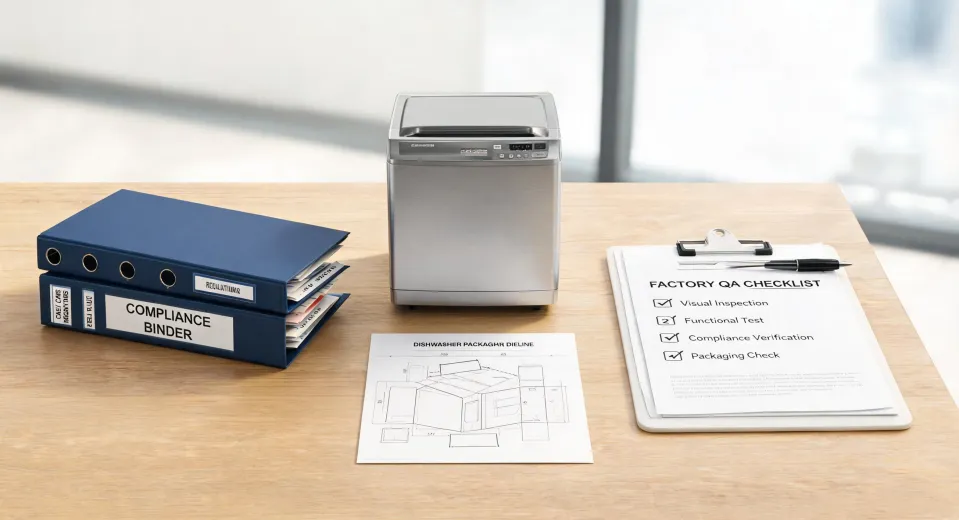
I now maintain our team's checklist, and it has caught 47 potential errors in the past 18 months. Some are as small as wrong handles. Some are as large as the wrong voltage for the dish machine. The checklist covers dimensions, voltage, water pressure, door swing, handle clearance, and service access. If any of those are missing, we don't process the PO. The checklist is boring. It works. If you're buying Miele—or anything else—make your own before you sign the quote.