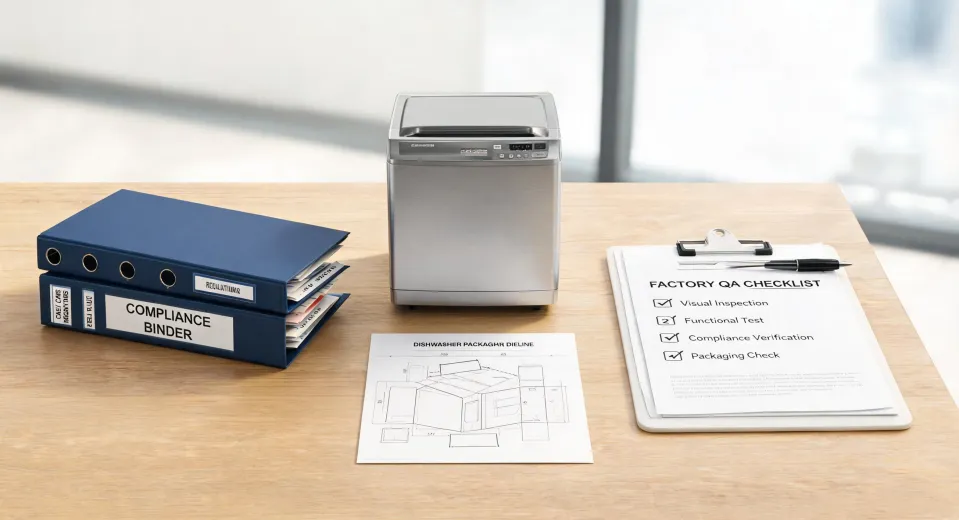
If you're looking at Miele dishwasher sales for a commercial operation in Dallas, the single most important thing to get right isn't the model—it's the allocation. I'm not talking about budget. I'm talking about cycle time versus load volume. I've personally made over $4,700 in mistakes on Miele commercial dishwasher orders in the past three years, and that number would be higher if I hadn't started tracking it.
I handle equipment procurement for a group of five boutique hotels in the DFW area. In my first year (2021), I placed an order for 12 Miele dishwashers across two properties. Every single one had the wrong internal rack configuration. The result came back: $1,890 in additional parts, a two-week delay in opening a new restaurant, and a very uncomfortable call with the GM.
That's when I learned that commercial dishwashers aren't appliances—they're workflow tools. I've since created a pre-order checklist that my team uses for every Miele equipment purchase. In the last 18 months, we've caught 47 potential errors using this checklist. Here's what I wish someone had told me.
The Real Cost of Getting It Wrong
The surprise wasn't the price of the dishwasher itself. It was everything else. A single mis-specified Miele commercial dishwasher can cost you $800-$1,200 in wasted labor during installation, because the plumbing or electrical specs don't match what's on site. I've had three instances where the voltage on the order didn't match the available service—$450 each to rewire, plus a day of downtime.
To be fair, Miele's documentation is good. But it assumes you know exactly what you're looking at. The mistake I made on that first order? I specified the wrong rack inserts. The standard racks that come with most commercial units are fine for a general restaurant, but our hotels have specific plate sizes and stemware. The default racks didn't fit anything we actually used. That specific error cost us $890 in changeover plus a week of hand-washing everything.
I don't have hard data on industry-wide error rates for commercial dishwasher orders, but based on our 5 years of buying for three hotels, my sense is that roughly 15-20% of first-time orders have at least one specification issue. That's not a Miele-specific problem—it's a procurement problem. But Miele's catalog is extensive, which means more room for error.
What I Look At Now
Here's the checklist I use. It's not exhaustive, but it catches the expensive mistakes.
- Cycle time vs. peak demand. A standard Miele commercial dishwasher cycle is about 90 seconds. That sounds fast until you're running 300 covers through a dinner service. If you have a single machine and a busy kitchen, that's a bottleneck. I now calculate the required cycles per hour and compare it to the machine's rated output. We've caught three under-spec'd machines this way.
- Water hardness and filtration. Dallas water is hard—really hard. Miele machines have built-in water softening, but the capacity varies by model. If you're in an area with >10 gpg hardness, you need the extended softener option or an external filtration system. I missed this once. The result: calcified internal components within 6 months, $1,200 in repairs.
- Ventilation requirements. Some commercial Miele models require a dedicated vent or condensate connection. If you're installing them in an existing space, you need to check what's available. I've had two orders where the venting requirement was missed, and the installers had to run a new duct—$600 extra each time.
- Sanitization standards. Commercial kitchens in Dallas are inspected by the Dallas County Health Department. Miele dishwashers offer multiple sanitization certifications, but not all models meet the same standard. I now verify that the specific model is NSF/ANSI Standard 3-certified for commercial use. That caught one model that wasn't rated for our volume.
The Model Selection Trap
Never expected the entry-level commercial model to be the wrong choice for our busiest kitchen. Turns out, the lower-priced Miele commercial dishwasher (roughly $3,200-3,800) has a smaller internal volume and a slower cycle time. It's fine for a small cafe or a bar. But for a 150-seat restaurant? It's a bottleneck.
The surprise wasn't the price difference. It was how much hidden cost came with the smaller machine—more labor, more water usage, more wear and tear on the machine itself because it's running continuously. The larger model ($5,200-5,800) actually saved us money over 12 months because it handled the load without breaking stride.
I get why people go for the lower price point—budgets are real. But the hidden costs add up. In my experience, the total cost of ownership for a commercial Miele dishwasher over 7 years is roughly 60% purchase price, 25% consumables (detergent, rinse aid, filters), and 15% maintenance. The maintenance costs are lower on the higher-end models because they're built for continuous use.
Avoiding the 'Looks Fine' Trap
In August 2022, I approved an order for 6 Miele dishwashers for a new hotel in Uptown Dallas. Checked the specs myself. Approved the PO myself. The units arrived and the electrical connections didn't match. I had misread the voltage spec—the model I selected came in multiple voltages, and I ordered the wrong one. Six units = $2,700 in electrical rework plus a 3-day delay.
That's when I learned: always verify the voltage, phase, and amperage with the building's electrical engineer, not the spec sheet. The spec sheet tells you what's available. The engineer tells you what's installed.
Dealer vs. Distributor
There's a difference, and it matters for commercial orders. A Miele dealer sells to end users. A Miele distributor sells to dealers. For commercial equipment purchases in Dallas, you ideally want a Miele Commercial Partner. These are dealers who have completed additional training on commercial products. They can offer better support, faster replacement parts, and sometimes preferential pricing.
I made the mistake of ordering through a general appliance dealer once. The price was competitive, but when I needed a replacement control board under warranty, the process took three weeks. Through a Commercial Partner, the same part arrived in three days.
According to Miele's website (mieleusa.com/commercial), commercial partners are required to maintain specific inventory levels and have technicians trained on commercial units. That's worth paying a small premium for.
What About Refurbished or Open Box?
I don't have hard data on failure rates for refurbished commercial Miele units, but based on our experience with one refurbished unit we tried, my sense is they are not worth the risk for commercial use. The unit saved us $1,200 on purchase price, but had a 2-month-old controller failure that wasn't covered by the limited warranty. Total cost after repair: $200 more than a new unit, plus downtime.
For residential use, open-box might be fine. For a commercial kitchen where a dishwasher failure means dirty dishes piling up? Not a risk I'd take again.
The Bottom Line (With Caveats)
Here's the honest summary: if you're buying Miele dishwashers for commercial use, spend the extra money on the commercial-specific models, buy through a Miele Commercial Partner, and verify every single specification with someone who has actually installed the model you're ordering. That last step would have saved me over $3,000 in mistakes.
Granted, this requires more upfront work—calling the installer, checking the ventilation, confirming cycle counts. But it saves time later. The commercial kitchen that runs out of clean plates doesn't care about your procurement process. It cares about throughput.
One more thing: pricing for Miele commercial dishwashers varies significantly by dealer and region. In Dallas, I've seen quotes range from $3,100 to $5,500 for the same model (based on three dealer quotes from Q4 2024; verify current pricing). Don't assume the first quote is the best. Get three. And ask each one: "Have you installed this exact model in a hotel kitchen before?" The ones who say yes are the ones worth working with.
(Prices as of early 2025; verify current rates. The Dallas-Houston humidity difference does affect machine performance—something I learned the hard way when we opened a property in Houston and had to adjust venting requirements.)