-
Step 1: Match the Spec Sheet to the Physical Unit
-
Step 2: Verify Water Quality and Softener Settings
-
Step 3: Inspect Filters, Seals, and Accessories
-
Step 4: Run a Full Cycle and Read the Error Codes
-
Step 5: Test the Cooking Equipment Properly
-
Step 6: Check the Amenities and Small Appliances
-
Common Mistakes I Still See
I manage quality and brand compliance for a commercial appliance supplier that outfits hotels, restaurants, and industrial laundries. I review about 800 units a year — washers, dryers, dishwashers, ovens, vacuums — before they get signed off and shipped to clients. In our Q1 2024 audit, I rejected 6% of first deliveries: wrong voltage, scratched panels, missing accessories, seals that didn't seat properly. None of that would have reached a client if someone had run a simple inspection before the truck arrived.
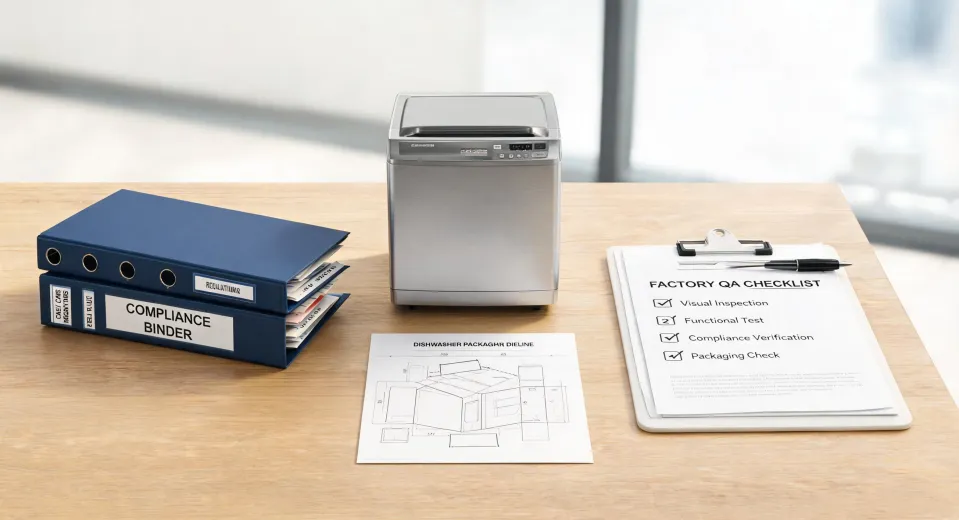
This is that checklist. Six points, roughly 45 minutes per machine. If you're about to accept a commercial Miele delivery — for a new build, a renovation, or a single-machine replacement — run through it before you sign anything. It'll save you from the conversations I've had too many times, the ones that start with "the unit arrived but..."
Step 1: Match the Spec Sheet to the Physical Unit
Before you even unbox, pull the purchase order and the spec sheet. Then find the rating plate on the actual unit — not the box, not the invoice, the unit. Model number. Serial number. Voltage. Phase. This sounds obvious, but in 2022 we accepted a pallet of 240V dryers for a job that specified 208V. The pallet sat in storage for three weeks before anyone caught it.
When a client asks me which is the best electric double wall oven for a renovation, I always start with the same questions: what's your cutout size, what's your electrical supply, and what's actually written in the spec. It doesn't matter how good the oven is if it doesn't fit the cavity or the conduit. I've seen an $18,000 kitchen project stall because the oven was right and the electrical layout was wrong.
If the rating plate doesn't match the PO, that's a red flag. Stop the inspection right there — don't let the install crew start unboxing while it gets sorted out.
Step 2: Verify Water Quality and Softener Settings
Commercial dishwashers and laundry systems need soft water. That's why many commercial units — Miele's included — come with an internal water softener built in. But the softener only works if it's set up for your actual water hardness and the salt supply is maintained. So when I inspect, I don't just look at the machine. I look at the water.
For anyone searching around this topic: what is water softener regeneration? Simply put, the softener contains resin beads that capture calcium and magnesium out of the water. Over time, the beads saturate. Regeneration is the cycle that pushes a brine solution through the resin, flushing the minerals down the drain and recharging the beads. It happens automatically on most commercial units — but only if the salt tank is full and the hardness setting matches your water supply.
I test hardness with a strip and check the softener's logged regeneration cycles. Hard water that slips through scales the heating elements and spray arms, which leads to cloudy glassware and premature part failure. And that's not a warranty conversation; that's a "the machine wasn't set up right" conversation. Much harder to explain to a CFO.
Step 3: Inspect Filters, Seals, and Accessories
Filters and seals are the first things to fail in commercial use, and they're the easiest to damage in shipping or installation. I check door gaskets on washers and dryers by closing the door on a piece of paper — if it pulls out without resistance, the seal isn't seating. I check lint filters for tears, because a torn lint filter lets debris into the blower housing. I check dishwasher spray arms spin freely and the sump filter is seated properly.
For vacuums, accessories matter as much as the motor. If housekeeping is sourcing Miele vacuum accessories Canada, I make sure they're genuine and matched to the exact model — commercial vacuums use different part numbers than residential units. We rejected a batch of "compatible" filters in 2023 that didn't fit any unit we stocked. The vendor refunded us, but we lost a week of housekeeping productivity while we sourced the right ones.
Step 4: Run a Full Cycle and Read the Error Codes
I insist on running a complete cycle on every washer and dryer before accepting delivery. Not a short program — a real one, preferably with a load of towels. If there's an intermittent fault, it usually shows up before first commercial use, not after.
Take the Miele dryer F066 error code, one of the most common we get calls about. In my experience, F066 points at a heating or airflow issue: the machine's sensors detect that the temperature isn't behaving as expected during the heating phase. The default assumption is usually "the heating element is dead." Nine times out of ten, though, it's a blocked lint filter, a crushed vent hose, or a kinked exhaust path. Don't hold me to this without the service manual for your serial range, but check airflow before you book a service appointment. A service visit runs $150–$300 in most markets; checking the vent is free. That's a TCO decision you can make in about five minutes.
I've told clients to cancel a scheduled repair based on this, and I won't pretend I didn't second-guess it afterward. But the vent hose was the culprit every single time. Well — so far.
Step 5: Test the Cooking Equipment Properly
For ovens, especially double wall ovens, I run both cavities through a test cycle and measure actual temperature with a probe — not the display. Set it to 350°F and see what it really holds. Check every mode: bake, convection bake, broil. Check the door closes fully and the interior light works. Granted, this takes time, but it's fifteen minutes that can save a service ticket after installation.
If you're evaluating what looks like the best electric double wall oven on paper, keep one thing in mind: the spec sheet tells you the inputs — capacity, wattage, features. It doesn't tell you how evenly the unit heats when it's actually loaded. Uneven heat means inconsistent baking, wasted food, and rejected dishes in a commercial kitchen. Test with the trays and racks you'll actually use, not an empty cavity.
Step 6: Check the Amenities and Small Appliances
Larger projects often include items we don't typically think of as "commercial" — hair dryers, for example. I have mixed feelings about the trend of consumer-grade hair dryers with salon-style brush attachments showing up on hotel spec lists. The price looks like a win. But the brushes get lost, the dryers aren't built for extended daily use, and when you're replacing a Shark hair dryer brush attachment at full retail because housekeeping lost it, the savings disappear fast.
To be fair, consumer dryers are fine for a small B&B with a handful of rooms. But at a hotel with 80+ rooms, the replacement rate we've tracked on consumer dryers is roughly triple that of commercial units. It's not that the consumer products are bad — it's that they were designed for a different workload. Run the total cost of ownership across three years and the commercial unit wins on price, not just durability.
Common Mistakes I Still See
Three things come up again and again:
1. Signing the waybill before unpacking. Once you sign, freight damage is your problem, not the carrier's. I learned this the hard way, and it's the reason my inspection process starts before the truck leaves the dock.
2. Assuming the manufacturer's pre-shipment check is enough. I used to think that too, until we received a batch with correct serial numbers and the wrong configured voltage. The pre-shipment check confirms the unit was built to what was ordered, not necessarily what your site can accept.
3. Waiting to program the machine until after installation. Water hardness settings, softener regeneration schedules, vent configurations — these are easy to set when the unit is accessible, and miserable to change once it's tucked into a tight alcove. Do it during the inspection.
Maybe I'm overly cautious. But in four years of doing this, the 45 minutes per machine has paid for itself every time it caught something — and I've lost count of how many times that's been. The checklist isn't about finding fault. It's about making sure that when you sign that delivery ticket, you're accepting what you actually paid for.